
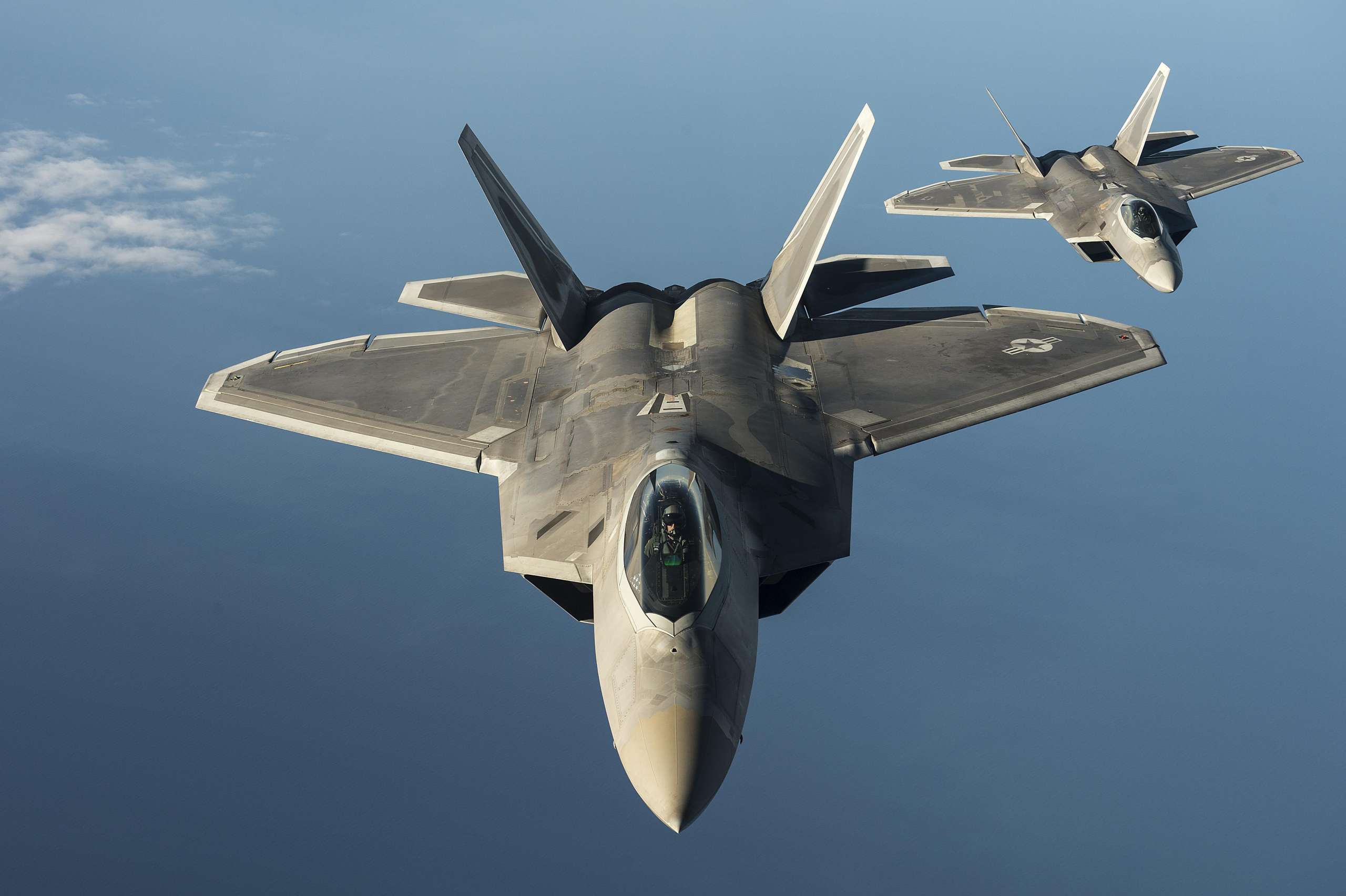
EDWARDS AIR FORCE BASE, Calif. — Future maintainers of the F-22 Raptor will realize quickly what America’s most technologically advanced fighter has in common with most of today’s computer operating systems.
It’s plug and play.
That means Raptor crew chiefs will be able to plug a laptop computer into a port on the aircraft’s underbelly to diagnose a problem, malfunction or glitch in a wide array of areas from avionics to propulsion.
It is another Air Force first from the F-22 Combined Test Force and the maintenance team that fixes, tweaks and innovates each day, and this plug-and-play capability is making more than one of its crew chiefs a little indifferent about the change.
“I’m not sure what to think of that just yet,” said Tech. Sgt. Robert Manter, the crew chief for jet number 4005. “A lot of us are used to walking around the jet and performing these tests on each of the separate systems. You just don’t do that with the F-22.”
In fact, there isn’t much that’s standard about F-22 maintenance and what this team is accomplishing in the high desert. There are no training orders. There are no hangar queens. There are none in the depot and no one to call with corporate knowledge. All of that is wrapped up with the XX civilian and military maintainers, who work each day to create an aircraft that will, one day, be the most dominant fighter jet on the planet.
And while there is none of the aforementioned sage wisdom on hand, maintainers are working side by side with the airframe engineers, the pilots and others who ply their trade in honing and shaping this aircraft. For Staff Sgt. Michael Graves, an avionics specialist with the CTF, the sensation of being part of the development of a new weapons platform is like no other.
“We’re learning something new every day. You become a sponge,” Graves said. “We do stuff each day that is just unbelievable.”
He added that every component, black box and weld is put in lace to help lower the number of maintenance personnel assigned to the Raptor. Graves knows that translates to a smaller personnel footprint on the battlefield and a big win for Air Force planners.
About that laptop …
That laptop, known as a portable maintenance aid, will be a key to ensuring the F-22 shelf life and keeping it flying. It will also eliminate much the paperwork associated with maintaining a fleet of fighters, Manter said. That means no more TOs. Only CDs.
The PMA plugs into an interconnected avionics, hydraulics, weapons and propulsion system. In an instant, a crew chief can check the oil, kick the tires, squeegee the windshield and ensure his radar-busting missile is ready to fly. So far, it is working as advertised, Manter said, and if its not, he and his team make it happen.
“Everything is centrally located, and the PMA will see it,” he said. “Even the smallest things are looked at. It’s all connected. If something in the software changes, we collect the data, move it along to where it needs to go and, eventually, we get a new compact disc to use.
“It’s a big switch,” he said about the loss of a thick, black binder with volumes of technical orders.
Innovations like that could also mean a higher mission-capable rate for the jet during both peacetime and wartime. That prospect excites people like Col. Chris Seat, the CTF director, an F-22 test pilot and one of aircraft’s most enthusiastic military proponents.
“I think the next generation of folks to work with F-22will be very comfortable with it right off the bat,” he said. “It is going to open up such a tremendous new capability. It’s going to be a whole new concept of operations and that is very exciting.
Ammo amazed
The Raptor upkeep is also amazing the Ammo troops.
Staff Sgt. Rob Rjasko is one of the Ammo kin who recently loaded and watched successful testing of an AIM-120 missile launch. He is also one of the first people to make sure the Joint Direct Attack Munition, a low cost guidance kit which converts existing unguided free-fall bombs into accurately guided “smart” weapons, would fit into the F-22 weapon’s bay properly.
Did it fit? “Oh yeah,” he said. “No problem.”
In Rjasko world, the F-22 is also changing the way business is being done. Hydraulics and nitrogen, not explosives, release the weapons from their airborne mounts. The weapons bay is also sealed when its not needed, lowering drag and increasing flight capability.
When fully loaded, the F-22 can carry two Sidewinders; six AIM-120C Advanced Medium-Range Air-to-Air Missiles, its 20mm Gatling gun; and two, 1,000-pound JDAMs, according to an Air Force fact sheet.
Needless to say, Rjasko has been working double-time to keep up with the innovation, and knows when the fighter is called to service, it will have no equal. “I’ve been able to make suggestions that have been implemented into the jet. How many people will be able to say that?” he asked. “It’s amazing. It’s going to be one deadly jet.”
Still in awe
While the innovation and testing continues at a breakneck pace until the first phase of testing ends in December 2002, Manter and his colleagues are still in awe of the jet’s capabilities and what it will be able to accomplish once deployed.
“Most people won’t believe what this aircraft will do,” he said.
F-22 test pilot Lt. Col. Gary Plumb agreed. “It is very flexible and very fast,” he said. “It’s a very exciting time to be part of this program because up to now, almost everything has just been on paper. This team is learning as it goes along.”
Graves talked about the wider ramifications of what his team his doing. “We’re working hand in hand with some brilliant people. Eventually, we’re going to be the ones who are expected to train the rest of the Air Force on how to fix this jet. It’s a big responsibility.”
For all its plug and play capability, the F-22 can still leave some people baffled.
“Everything they said it can do, it does. To look at a jet that big, that agile and be told that no one will be able to see it or catch it is amazing,” Graves concluded.